Beard Trim vs Beard Reshape: Which Service Do You Need?
A beard trim mainly reduces and tidies existing growth. A reshape changes the visible structure: cheek line, neckline, weight, length distribution or connection to the moustache. Describe the problem you want solved so the booking allows enough time.
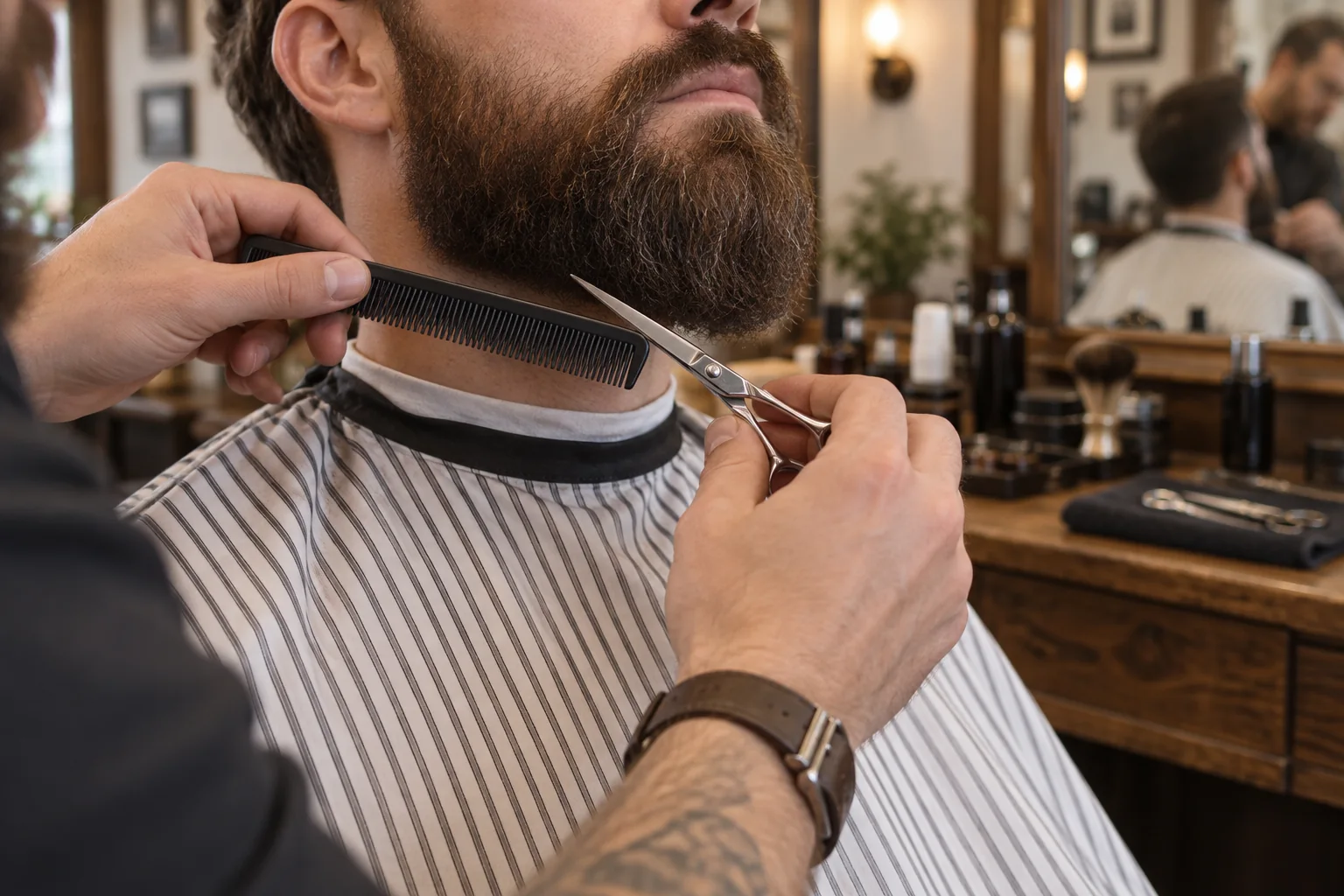
A beard trim mainly reduces and tidies existing growth. A reshape changes the visible structure: cheek line, neckline, weight, length distribution or connection to the moustache. Describe the problem you want solved so the booking allows enough time.
What a straightforward trim does
A maintenance trim removes uneven ends, reduces bulk and restores an outline that already works. The client usually wants the beard to look like the same beard, only tidier. Agree the target length, whether the moustache is included and how natural or sharp the edges should remain.
Do not request “just a tidy” if the beard feels too heavy at the chin, too wide at the sides or disconnected from the haircut. Those are shape decisions, not only length decisions.
What reshaping changes
A reshape can move visual weight toward or away from the chin, reduce width at the cheeks, establish a neckline, soften an artificially high cheek line, or create a clearer transition into the sideburns. Some goals require growth before they can be achieved.
If a previous neckline was taken too high, cutting more hair will not restore it. The useful plan may be to tidy the current edge conservatively and allow the lower section to grow.
Prepare for the appointment
Arrive with the beard clean, dry and worn as usual. Avoid removing a difficult section immediately beforehand; the barber needs to see growth direction and density. Bring photographs that show the beard from the side, not only the front, and identify what you like about each image.
Mention sensitive skin, a preference to avoid certain tools and whether you maintain the outline at home. Product can make sparse areas appear denser, so the barber should see the natural structure before shaping.
Worked examples
Trim: a four-week beard has the intended outline but stray ends and extra weight under the jaw. The same basic shape is shortened and balanced. Reshape: a beard looks wide at the sides and weak at the chin. The barber retains length through the centre, reduces side bulk and adjusts the transition into the haircut.
The second service needs more consultation and should not be booked as the fastest maintenance option.
Cheek line, neckline and moustache
A natural cheek line generally preserves more density; a sharp line creates stronger contrast but shows regrowth sooner. A neckline placed too low can look heavy, while one placed too high can make the beard appear smaller. The correct position depends on the intended beard length and the person’s growth.
Decide whether the moustache remains full, clears the lip, connects at the corners or becomes a separate feature. It should not be shortened automatically simply because the beard is being trimmed.
Home maintenance between visits
Ask which lines can be cleaned safely and which areas create the shape. Removing obvious hairs high on the cheek is different from redrawing the cheek line every few days. At the neckline, repeated small corrections can gradually move the boundary upward. Photograph the professional result from the front and both sides before attempting maintenance.
Use clean tools, trim dry hair conservatively and stop when the original outline is no longer obvious. A short period of untidy growth is easier to reshape than a missing section.
Our view
Book by outcome rather than price label. If you want to keep the current identity, ask for a maintenance trim. If you want the beard to make the face look different or correct an old outline, describe it as a reshape and allow consultation time. A cautious first reshape leaves options for the next visit.
Next step
Save photographs of the result you want and the result you already have. For a shop visit, review our services and confirm current availability on Booksy. To question a claim or request a correction, read our editorial policy.