
Choosing a Practical School Haircut
A useful school haircut should meet the school’s current appearance policy, suit the child’s hair and morning routine, and grow out without becoming difficult immediately. Check the written policy rather than relying on another family’s interpretation.
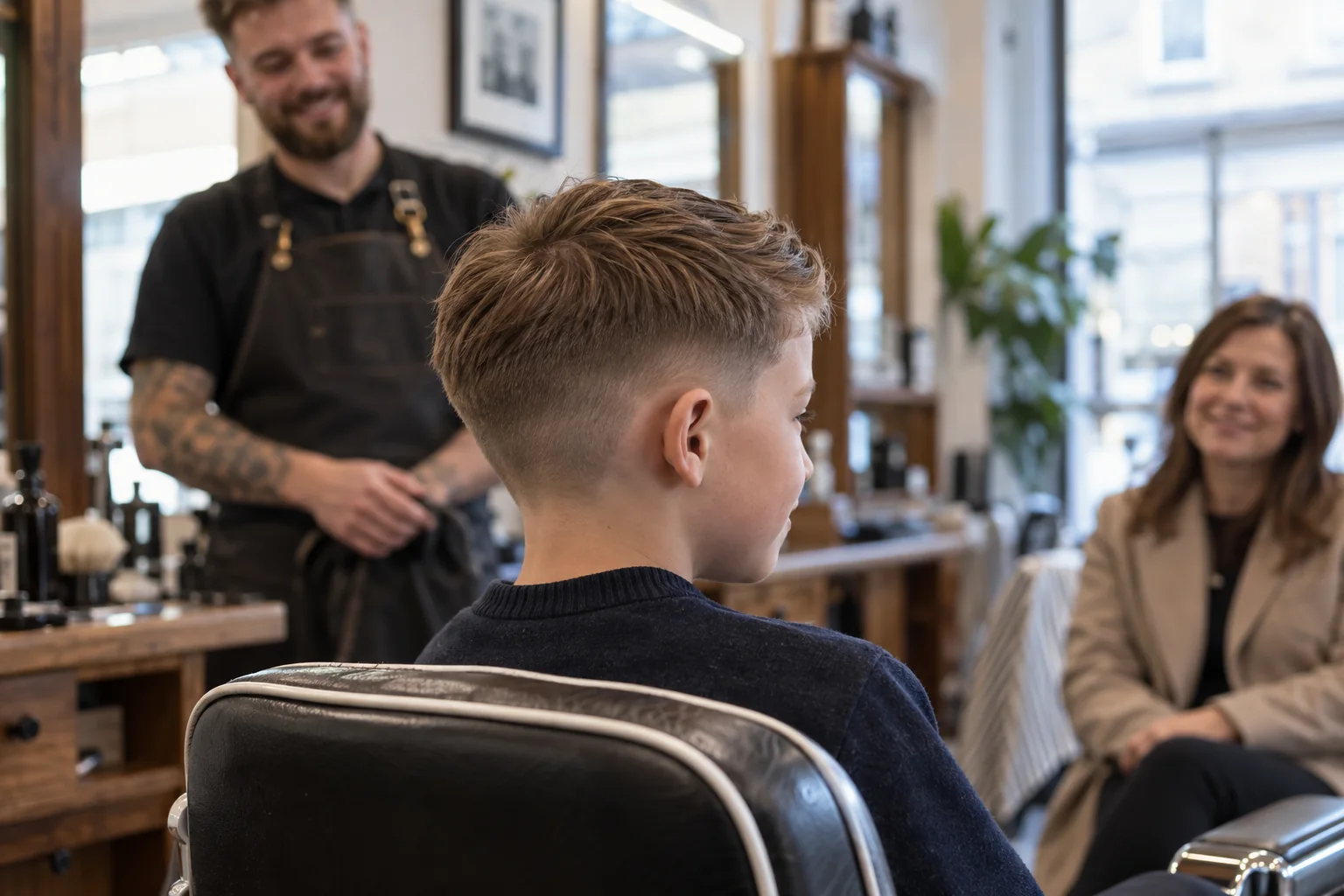
A useful school haircut should meet the school’s current appearance policy, suit the child’s hair and morning routine, and grow out without becoming difficult immediately. Check the written policy rather than relying on another family’s interpretation.
Check the actual school policy
UK schools set their own appearance rules, and wording can change. Look for the current policy on the school website or ask the school directly before requesting shaved patterns, extreme contrast, colour or a cut that exposes a design line. Do not assume that a style accepted at one school will be accepted at another.
Bring the relevant wording to the appointment if it is unusually specific. A barber can then adapt the shape without having to guess what “smart” or “conventional” means to that school.
Choose for the morning routine
A cut that needs blow-drying, several products or frequent reshaping may not suit a rushed school morning. Ask how the fringe sits after sleep, whether the crown needs directional drying and what the style looks like without product. For many families, a slightly softer cut is easier to maintain than a very sharp finish.
Let the child take part in the choice within the real constraints. Showing two or three acceptable reference options provides control without turning the consultation into an unlimited decision.
Plan the grow-out
Very short sides can create a strong contrast on day one but may need more frequent attention. Leaving a little weight around the temples and choosing a natural neckline can make growth less obvious. Longer fringes may need an earlier tidy even when the rest of the cut remains presentable.
Ask which section will look untidy first and whether a small adjustment can extend the interval between full cuts.
Worked example
A child wants a modern fade, while the school policy rules out extreme contrast and patterns. The family shows the barber a low taper with a textured top, confirms that no design line will be added, and leaves enough length at the front to sit naturally without product. The child still recognises the chosen style, while the parent has a clear explanation if the school asks.
The important step is translating a trend name into visible, policy-relevant details.
Comfort and communication
Tell the barber if the child dislikes clippers, loose hair, capes or sitting still for a long service. A simpler cut completed calmly may be more successful than an intricate style that exceeds the child’s comfort. Agree a pause signal and a realistic minimum result before starting.
A school haircut should not be used to override the child’s communication. For first visits or sensory concerns, read our preparation guides and contact the shop before travelling.
Timing the appointment
Avoid the final evening before term when the child is tired and there is no time to adjust an unfamiliar result. If the style is new, leave several days for ordinary washing and styling before school. Bring a spare top when loose hair is irritating and choose a time that does not clash with meals or another rushed commitment.
For regular cuts, note when the fringe or sides first become difficult and book backwards from that point next term. A predictable routine can make both appearance and the visit easier to manage.
Final checklist
- Current school policy checked.
- Front, side and back reference views saved.
- Morning styling time understood.
- Grow-out and return interval discussed.
- Child knows the basic steps and how to request a pause.
Our view: the best school cut is repeatable, comfortable and clear enough that everyone understands what was agreed.
Next step
Save photographs of the result you want and the result you already have. For a shop visit, review our services and confirm current availability on Booksy. To question a claim or request a correction, read our editorial policy.