How to Trim a Moustache Without Losing the Shape
Trim a clean, dry moustache in its normal direction. Establish a comfortable lip line first, remove only obvious excess, and check the whole shape from normal viewing distance after every small change. Most home mistakes come from chasing symmetry too closely.
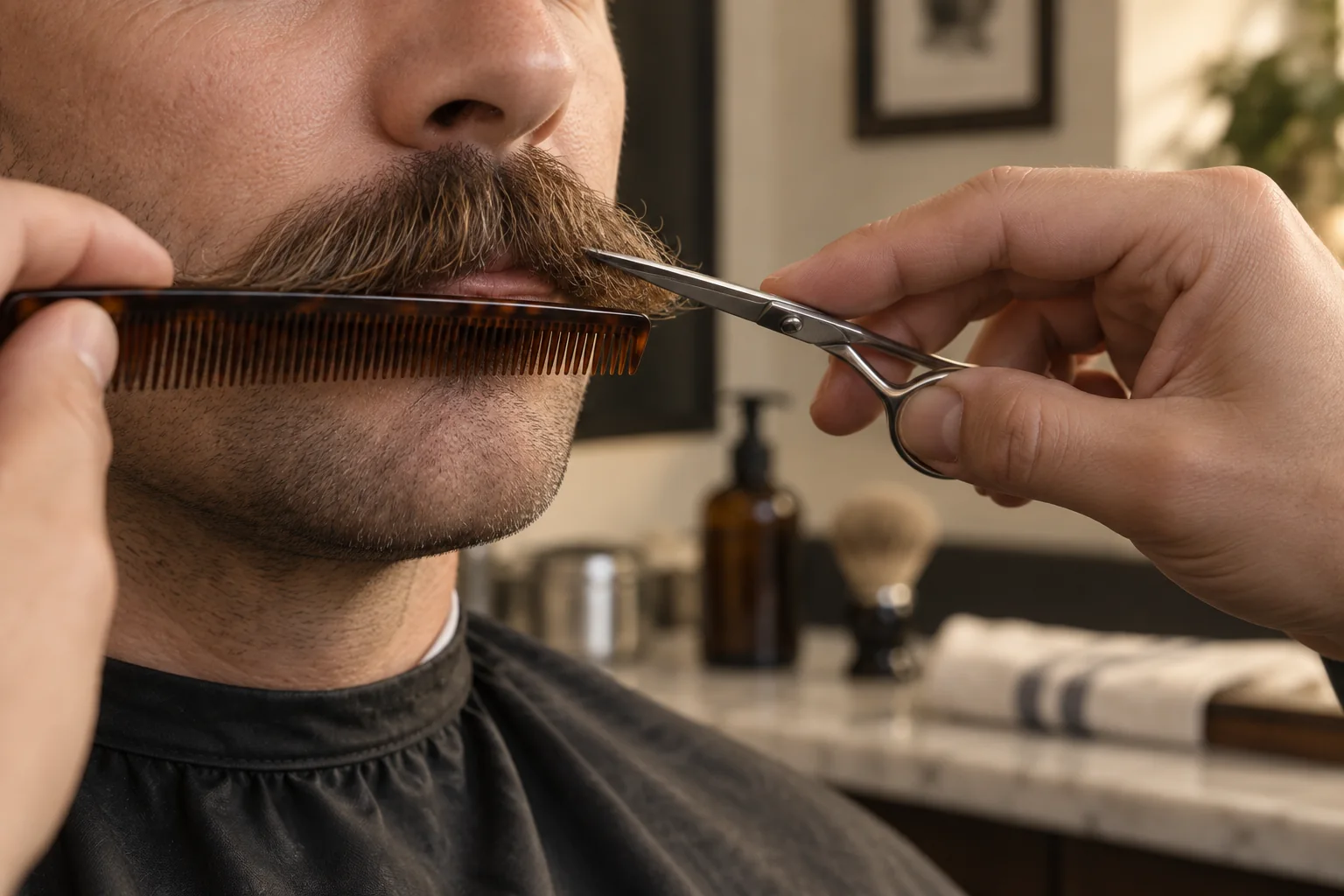
Trim a clean, dry moustache in its normal direction. Establish a comfortable lip line first, remove only obvious excess, and check the whole shape from normal viewing distance after every small change. Most home mistakes come from chasing symmetry too closely.
Prepare the hair and tools
Wash out wax or heavy product and let the moustache dry completely. Comb it in the direction it normally sits. Use a clean moustache comb and small, controlled scissors; a large pair of household scissors makes it difficult to see the cutting point. Work in strong, even light.
If the intended style depends on longer ends, separate those hairs before trimming. Do not let a routine lip-line tidy remove the length needed for a handlebar or wider natural shape.
Set the lip line
Decide whether the moustache should sit above the lip, touch it lightly or cover part of it. Comb the hair down and remove tiny amounts from the centre outward. Keep the mouth relaxed; stretching the lip changes the apparent line and can produce an uneven result when the face returns to rest.
Stop and re-comb after each pass. Loose cut hairs can make an area look longer than it is.
Reduce bulk carefully
Length and bulk are different. Cutting the lower edge shorter may clear the mouth without reducing thickness through the body. If the moustache feels heavy, lift small sections with the comb and trim only hair extending beyond the intended plane. Avoid cutting deep into the top line unless changing the style deliberately.
Clippers can remove a large amount quickly. Start with a longer guard than expected and understand that guard labels and lever positions vary by tool.
A symmetry check that works
Look straight ahead from ordinary mirror distance, then check from both sides. Compare the outer width, lowest point and amount of visible lip. Faces and growth patterns are not perfectly symmetrical, so matching hair by individual millimetres can make the overall result look less balanced.
Worked example: one corner grows downward while the other grows outward. Cutting the downward side repeatedly to match the shorter visual width creates a gap. Training it with the comb or leaving the opposite side slightly fuller may produce better balance.
When to stop
Stop if the intended outline is no longer clear, one side is becoming progressively smaller, or a gap has appeared. Clean away loose hair, wait until the next day and reassess. Continuing immediately often turns a correctable difference into a much shorter moustache.
See a barber when changing from a full natural shape to a pencil, lampshade or handlebar, or when reconnecting the moustache to a beard. The first professional outline makes later maintenance easier.
Common mistakes
Trimming wet hair, holding the lip in an unnatural position and cutting the centre too high are common ways to lose the intended line. Another is shortening the outer corners every time they curl, even when those hairs are needed for the chosen width. Product can temporarily hide unequal length, so assess the clean moustache before deciding what to remove.
Do not use another person’s guard number as a universal recipe. Density, colour and growth direction change how much skin shows and how quickly a narrow outline appears sparse.
Hygiene and upkeep
Clean the comb and scissors after use and store them dry. Keep product light near the mouth and follow its labelled directions. Trim frequency depends on the sharpness of the chosen outline: narrow, defined styles show regrowth sooner than a natural moustache.
Our view: home maintenance should preserve a known shape, not redesign it every few days. Remove less than you think, and leave structural changes for a deliberate consultation.
Next step
Save photographs of the result you want and the result you already have. For a shop visit, review our services and confirm current availability on Booksy. To question a claim or request a correction, read our editorial policy.