Skin Fade vs Taper Fade: What to Ask For
A skin fade finishes at bare skin; a taper keeps some hair at the shortest point. The better choice depends on how sharp you want the contrast to look, how often you can return, and how much scalp you want visible.
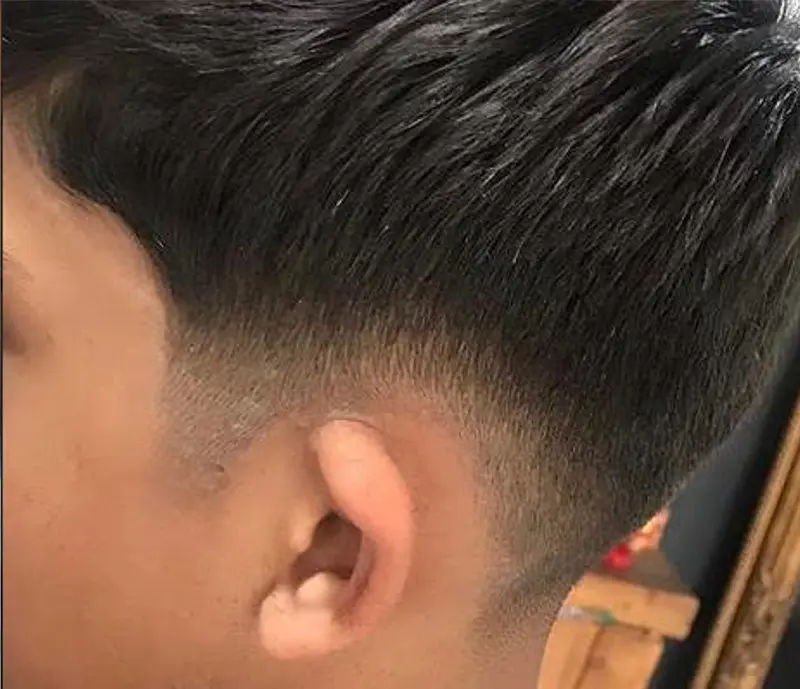
A skin fade finishes at bare skin; a taper keeps some hair at the shortest point. The better choice depends on how sharp you want the contrast to look, how often you can return, and how much scalp you want visible.
The difference in plain English
Both cuts use a gradual transition from shorter hair into longer hair. A skin fade takes the lowest section down to skin or near-skin, creating a strong contrast. A taper fade normally leaves a little length at the sideburns and neckline, so the finish is softer and the grow-out is less obvious.
Do not rely on the word “fade” alone. Different shops may use “zero”, “skin” and individual clipper grades differently. Show a reference image and agree where the blend should start before the cut begins.
Low, mid or high?
The height describes where the shortest section begins to blend into the longer hair. A low fade stays close to the ears and neckline. A mid fade creates more visible contrast around the middle of the sides. A high fade removes more weight and makes the top look more disconnected.
A useful chair-side request is: “I would like a low taper, keeping weight around the temples, with a natural neckline.” For a sharper result: “A mid skin fade, not taken too high, blended into the length on top.” Those phrases give the barber decisions they can confirm rather than a trend name they must interpret.
How the two cuts grow out
The bare section of a skin fade becomes visible stubble quickly. That does not mean the cut has failed; it means the high-contrast finish has a shorter visual life. A taper generally changes more gradually because there is less difference between the shortest and longest areas.
Worked example: someone who can visit every two or three weeks and likes a crisp outline may prefer a skin fade. Someone who visits every four weeks, works in a conservative setting, or dislikes visible scalp may be happier with a low taper. Hair density, growth direction and scalp sensitivity can change that recommendation.
What to bring and say
- Bring two or three photos showing the sides as well as the front.
- Say how long it has been since your last cut.
- Explain whether you style the top and how much time you spend on it.
- Agree the shortest grade, blend height, neckline and sideburn finish.
- Mention scars, sensitive areas or a preference to avoid foil shavers.
The name of a haircut is only the starting point. A good consultation translates the image into choices that suit your hair and routine.
Common misunderstandings
A taper fade is not automatically a low fade, and a skin fade is not automatically high. “Taper” describes a softer reduction around selected edges in some shops, while other barbers use it for a complete blended side. “Skin” describes the shortest finish, not where the blend begins. This is why two people can ask for the same phrase and leave with different-looking cuts.
Another common mistake is choosing only from the fresh-cut photograph. Look for an example with a similar top length and ask how the cut will sit after ten days. A strong contrast can make a style photograph well on day one while requiring more upkeep than the wearer expects.
If the first result is not right
Describe the problem in observable terms: too much scalp above the temple, a blend beginning higher than expected, too little weight at the corner, or a neckline that feels too sharp. Avoid asking another barber simply to “fix the fade” without explaining the desired endpoint. Some problems can be softened immediately; others require growth. An honest recovery plan is more useful than removing more hair to chase symmetry.
Our view
For most first-time fade clients, a low taper is the lower-commitment option: it is softer, grows out more quietly and leaves room to go shorter next time. Choose a skin fade when the sharper contrast is the point and you are comfortable with more frequent maintenance. Neither is automatically “better”.
Sources and method
This guide combines practical barber-chair explanation with the following named sources. Product, clinical and trend claims are not inferred beyond those sources.
Next step
Save photographs of the result you want and the result you already have. For a shop visit, review our services and confirm current availability on Booksy. To question a claim or request a correction, read our editorial policy.